
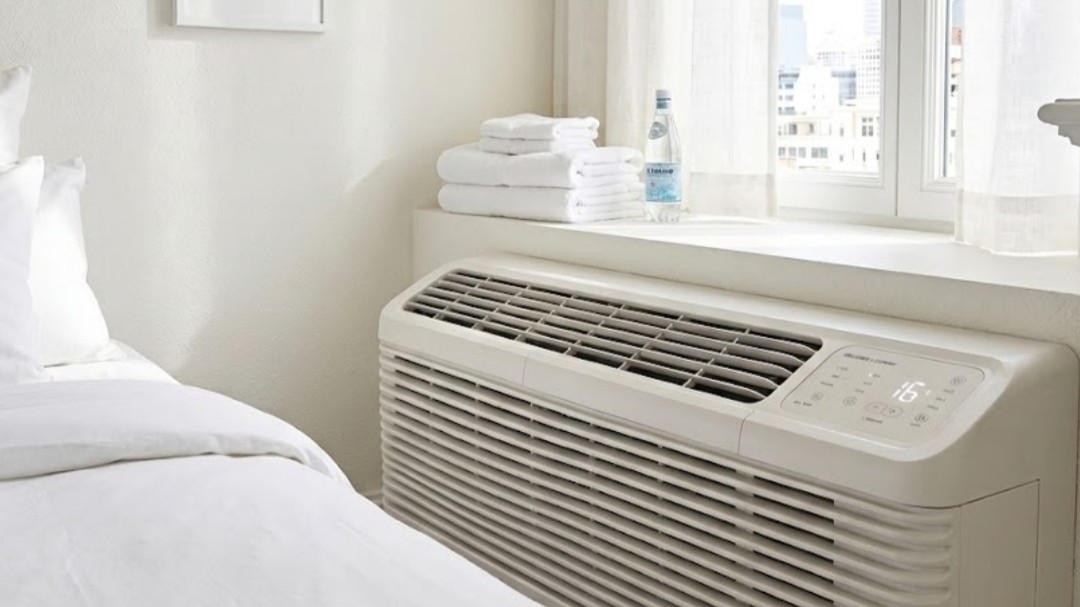
Across PTACs, PTHPs, through-the-wall air conditioners, VTACs and twin-duct monobloc systems, one technology is becoming increasingly common:
Inverter compressors.
We are already seeing more inverter options enter the traditional 42-inch PTAC market. VTACs have been moving in this direction for some time, and twin-duct monobloc systems have largely been built around inverter technology from the beginning.
Now the smaller through-the-wall market is being pushed in the same direction.
New DOE efficiency requirements are forcing much of the 24-inch and 26-inch through-the-wall category to significantly change. Some manufacturers are simply choosing not to continue producing certain products under the new requirements, while others are being pushed to develop inverter-based platforms in order to remain in the category.
And I think this is only the beginning.
There is an interesting comparison to what happened with ductless mini-splits in North America.
Cooling-only became heat pump.
Heat pump became inverter.
Inverter technology improved efficiency and comfort.
Then manufacturers started pushing heat pump operation to lower and lower outdoor temperatures.
Through-the-wall packaged HVAC appears to be following a similar path.
Heat pumps are becoming more important. Inverter compressors are becoming more common. Manufacturers are already working on improved low-ambient heat pump performance.
It is no longer a question of whether a packaged through-the-wall heat pump can operate at -30°C/-22°F. The question is how soon we get there.
What makes this transition particularly interesting is that inverter technology is also becoming more affordable. As more HVAC categories adopt inverter compressors, manufacturing scale increases and the cost difference compared with traditional fixed-speed technology continues to become easier to justify.
Efficiency is an obvious benefit, especially as utilities and governments continue offering incentives for higher-efficiency equipment.
But I think one of the biggest changes customers will notice is sound.
A traditional 42-inch PTAC may operate roughly in the 45 to 55 dBA range depending on capacity, design and operating conditions.
With inverter technology, the compressor does not always need to operate at full capacity. As the room approaches set point, the system can reduce output and maintain temperature at much lower operating speeds.
With our Genuine Comfort Ultra Series 42-inch Inverter PTAC/PTHP, we have seen operating sound levels in the approximately 25 to 32 dBA range at lower inverter speeds.
That changes the conversation.
Through-the-wall packaged equipment has traditionally been attractive because of its relatively low equipment and installation costs compared with systems such as VRF, water-source heat pumps and many mini-split applications.
Historically, one of the trade-offs has been noise.
Inverter technology is beginning to challenge that trade-off.
If through-the-wall products can continue combining lower installation costs with inverter efficiency, quieter operation, stronger low-ambient heat pump performance and technologies such as make-up air, ERV and improved filtration, I believe the potential applications for this category could expand significantly.
Hospitality is an obvious market, where room HVAC noise remains an important guest-comfort issue.
But I also think there is a much bigger conversation coming around multifamily and affordable housing.
This category is evolving quickly, and it is exciting to be part of it.
At Genuine Comfort, our Ultra Series Inverter PTAC/PTHP is already demonstrating what this transition can look like: inverter-driven performance, significantly quieter operation and a platform designed around where the PTAC market is heading.
The PTAC has always been one of the most practical ways to heat and cool a room. Now the technology is starting to catch up with the simplicity of the concept.